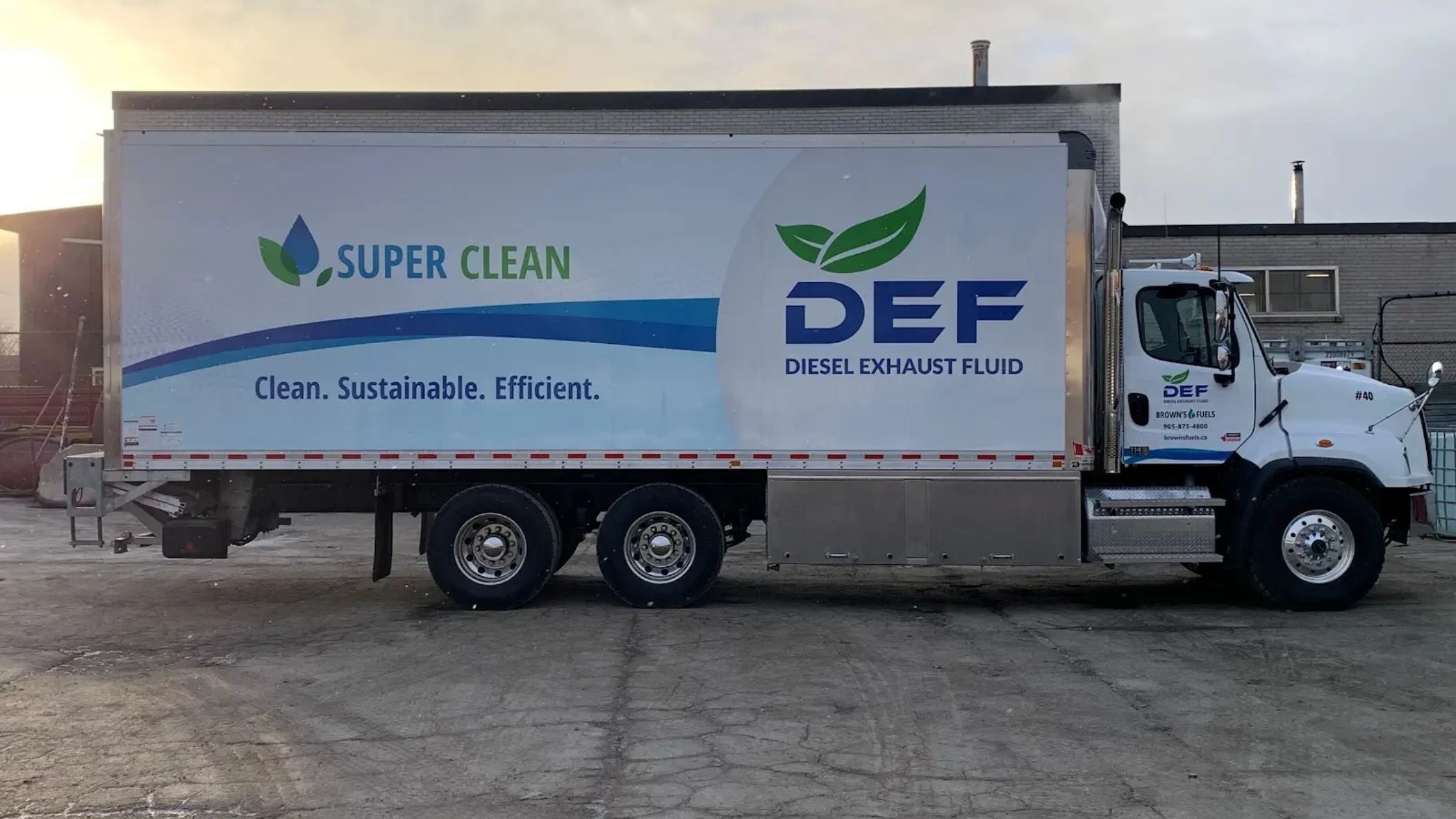
When temperatures drop across Ontario, fleet managers have more than diesel fuel to think about. Modern diesel vehicles and equipment also depend on Diesel Exhaust Fluid (DEF) to operate their emissions control systems. For businesses running trucks, construction equipment, and industrial machinery throughout the winter, managing DEF supply and storage is an important part of keeping operations on schedule.
One common question during colder months is: Does diesel exhaust fluid freeze in winter?
The answer is yes. DEF freezes at approximately -11°C (12°F). However, freezing does not automatically make the fluid unusable. The challenge for fleet operators is understanding how freezing affects DEF storage, how vehicle systems handle frozen fluid, and how to maintain a reliable supply when temperatures fluctuate.
With the right storage and handling practices, businesses can continue managing DEF effectively throughout an Ontario winter.
What Is Diesel Exhaust Fluid and Why Do Diesel Vehicles Need It?
Diesel Exhaust Fluid is an emissions-control solution used in diesel engines equipped with Selective Catalytic Reduction (SCR) technology. It helps reduce nitrogen oxide (NOx) emissions produced during diesel combustion.
DEF is made up of 32.5% high-purity urea and 67.5% deionized water. It is stored in a separate tank on the vehicle and injected into the exhaust stream, where it reacts with a catalyst to convert harmful nitrogen oxides into nitrogen and water vapour.
DEF is not a fuel additive and should never be poured into a diesel fuel tank. It must remain separate from diesel and other fluids to maintain the purity required by the SCR system.
For commercial fleets, maintaining an adequate supply of quality DEF is just as important as keeping diesel fuel available. Running low can trigger dashboard warnings and, depending on the vehicle, lead to operating restrictions.
At What Temperature Does DEF Freeze?
DEF begins to freeze at approximately -11°C (12°F). Because it contains a high proportion of water, freezing is a normal physical characteristic of the fluid rather than an indication that it has become defective.
An important detail is that DEF freezes and thaws without changing its intended urea concentration when it is manufactured to specification. The urea and water freeze together at the correct ratio, so properly handled DEF can be used once it has thawed.
Most modern diesel vehicles equipped with SCR systems are designed to handle this process. Their DEF tanks and supply systems typically include heating components that help thaw the fluid after the engine starts, allowing the emissions system to operate as designed.
However, vehicle designs differ. Operators should follow the manufacturer’s instructions for cold-weather operation, especially when equipment will remain parked for extended periods in freezing conditions.
Can Frozen DEF Damage Your Vehicle or Equipment?
Frozen DEF inside a properly designed vehicle system does not necessarily cause damage. The bigger concern is the expansion that occurs when the fluid freezes.
Like water, DEF expands as it turns to ice. According to the American Petroleum Institute (API), it can expand by up to 7%. This creates a potential problem for storage containers or bulk tanks that are filled too close to capacity.
If a storage tank has insufficient room for expansion, freezing can put pressure on the tank and potentially damage the container or associated equipment.
For businesses storing DEF in drums, totes, or larger on-site tanks, this makes winter storage planning particularly important. Storage systems should be suitable for DEF and installed or maintained according to the manufacturer’s specifications.
It is also important to remember that frozen DEF should not be treated with improvised solutions. Never add diesel anti-gel products, other additives, or chemicals to DEF to prevent freezing or speed up thawing. DEF must maintain its specified composition to work correctly in an SCR system.
How Should Businesses Store DEF During an Ontario Winter?
For businesses that use DEF regularly, proper storage is essential to maintaining product quality and ensuring that equipment can be refilled when needed.
Choose the Right Storage Location
DEF should be kept in a cool, dry, and well-ventilated area, away from direct sunlight and excessive heat. Where practical, indoor storage can help protect bulk supplies from extreme temperature fluctuations.
For outdoor operations, a purpose-built heated storage enclosure may provide a more suitable solution. The storage equipment should be designed specifically for DEF and maintained within the recommended temperature range.
Use Dedicated DEF Storage and Dispensing Equipment
DEF purity matters. Dirt, fuel residue, oil, and other contaminants can compromise the fluid and potentially damage sensitive SCR components.
Use dedicated DEF tanks, hoses, pumps, and dispensing equipment. Avoid using funnels or containers that have previously held diesel, oil, or other products. Follow the equipment manufacturer’s cleaning and handling instructions, using appropriate deionized or distilled water where required.
The API also recommends using certified DEF that meets the ISO 22241 specification. This helps ensure the product meets the purity and composition requirements expected by diesel engine manufacturers.
Monitor Inventory and Rotate Stock
DEF has a limited shelf life, and storage temperature affects how long it maintains its quality. Roma Fuels indicates a shelf life of approximately 12 months when stored properly under its recommended conditions.
Businesses should monitor inventory, check product dates, and use older stock first. This is especially important when purchasing DEF in larger quantities for seasonal operations.
How Can Fleet Managers Maintain a Reliable DEF Supply in Winter?
Cold weather can make supply planning more complicated, particularly for businesses operating several vehicles or machines across multiple locations. A fleet that consumes DEF regularly needs a replenishment plan that accounts for usage, storage capacity, and delivery requirements.
Start by reviewing how much DEF your fleet typically consumes. Roma Fuels notes that DEF consumption is generally around 3% of diesel fuel consumption, although actual usage varies by vehicle, engine, and operating conditions.
A business running long-distance trucks may need more frequent replenishment than a smaller local fleet. Construction companies may also experience changing demand as equipment moves between job sites or project requirements shift.
Bulk DEF delivery can help businesses maintain a more consistent supply without relying entirely on individual containers or repeated off-site purchases. Roma Fuels offers DEF in 9.4-litre jugs, 202-litre drums and 1,200-litre totes, as well as direct-to-equipment wheel-to-wheel refueling.
For larger operations, Roma Fuels also offers heated DEF storage solutions, including 5×6 and 7×10 heated huts. These options can help businesses establish more practical on-site storage arrangements for winter operations.
Keep Your Fleet Ready for Ontario’s Coldest Months
DEF freezing is a normal part of winter operations for diesel vehicles, but poor storage, contamination, and inadequate inventory planning can create avoidable complications. Understanding the fluid’s freezing point, using suitable storage equipment, and maintaining a reliable replenishment schedule can help businesses protect their investment and keep equipment operating as intended.
Roma Fuels provides commercial DEF supply, bulk delivery, direct-to-equipment refueling, and storage solutions for businesses across the Greater Toronto Area and surrounding Ontario communities.
Need a dependable DEF supply for your fleet this winter? Contact Roma Fuels to discuss your consumption requirements, bulk delivery options, and heated storage solutions.